The $30 Painting in the Hallway: What to Do Before You Price Anything in Your Parents' House
A $30 estate sale painting sold for about $1.3 million at auction. Here is what heirs should do before they price a house full of belongings.
The painting hung in a hallway that led to the garage of a doctor's house in Michigan. It was eight inches by eleven, a picture of ten seashells, and the price on it was $30.
A picker bought it at the estate sale in July. On October 1 it sold at Freeman's in New York for about $1.3 million.
I read that story twice. Then I thought about every hallway I have walked down in every house I have been asked to sell.
What happened
The painting is called "Alderman Merriam's Shells." Gertrude Abercrombie painted it in 1951. She worked in Chicago and died in 1977, and collectors have been paying more for her work every year.
According to The Art Newspaper, she traded the painting to Dr. John Reynolds of Kalamazoo in exchange for surgical services. He owned it for decades. When his estate was liquidated this summer, the painting went into the sale with everything else.
The buyer, who has stayed anonymous, did not know what it was either. WBEZ in Chicago reported how the buyer found out. They went to an Abercrombie exhibition at the Milwaukee Art Museum. They found a photograph of the painting in the exhibition catalog, next to a 1952 Chicago Tribune review. Then they took it to Susan Weininger, an art history professor at Roosevelt University who has studied Abercrombie for years, and she authenticated it.
Freeman's estimated it at $150,000 to $250,000. Bidders took it past $1 million. That beat the artist's previous record, set at Sotheby's last November.
The family did nothing foolish
It would be easy to read this as a story about a careless family. I do not see it that way.
Most houses hold forty or fifty years of living. The people clearing them out are grieving, tired, and usually working against a closing date. A small picture of seashells by the garage door does not look like money. It looks like one more thing to deal with.
And most of the time it is. For every painting like this one, there are thousands of hallway pictures worth what the sticker says. I would be lying if I told you your mother's house is full of hidden treasure. It probably is not.
The trouble is that you cannot tell which house you are standing in until somebody looks.
A price tag is a guess. A bid is an answer.
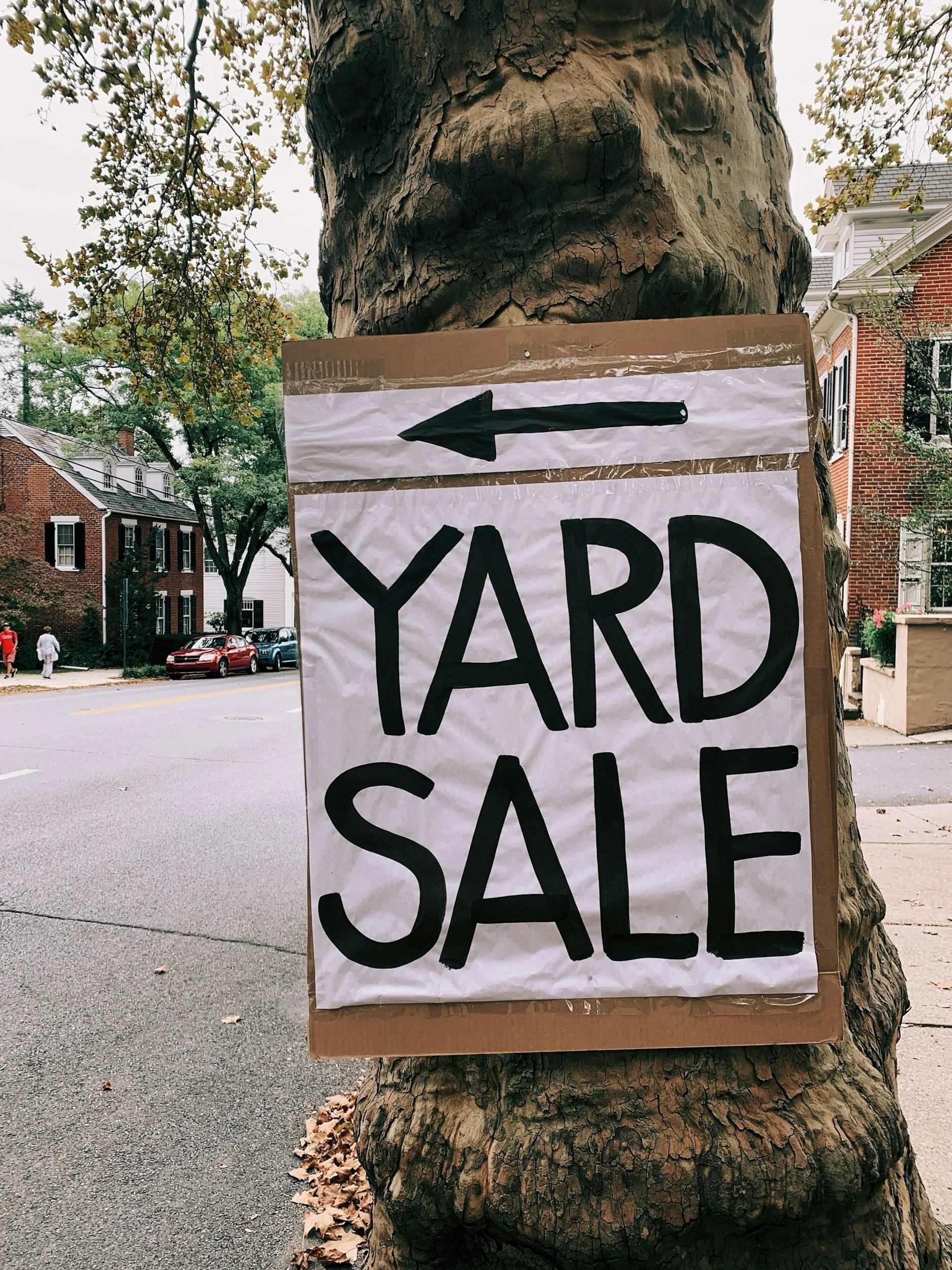
At a tag sale, somebody decides the price ahead of time. The first person through the door who wants the item pays that price, and it is over. If the price was wrong, nobody finds out until later, if ever.
At an auction, nobody has to know the right number ahead of time. The item goes in front of the people who want it, and they tell you what it is worth by bidding against each other. The estimate on this painting was $150,000 to $250,000, set by people who knew exactly what it was. They were still off by about a million dollars. The bidders corrected them.
That is what competition does. It protects a seller from a wrong guess, in either direction.
What to do before you price anything
If you are settling an estate, here is the order I would work in.
Do not throw anything away yet. Papers, letters, receipts, and old exhibition programs are how a thing gets identified. The paperwork is often in a different room from the object.
Walk the whole house, including the places nobody lived in. Hallways, garages, attics, barns, closets, the back of the smokehouse. Things end up there because somebody ran out of wall.
Look at the back and the bottom. Signatures, labels, dates, gallery stickers, maker's marks. Take a photo of each one.
Write down what the family knows. Where did it come from? Who gave it to whom? The doctor in this story got his painting in a trade. That one fact helped tell the painting's history.
Ask before you price. Have someone who handles estates walk through before a single sticker goes on. For anything signed, old, or odd, get a second opinion from a specialist. A phone call and a few photos cost very little.
Then choose how to sell. Everyday household goods can sell one way. The few things that need the right buyers can sell another. They do not all have to go out the same door on the same Saturday.
This goes for land too
I sell more farms than paintings. The same thing happens with land.
A family will tell me what they think the home place is worth because of what a neighbor got, or what somebody offered them at the mailbox. Sometimes they are close. Sometimes there is road frontage, timber, or a second building site they have looked at their whole lives and stopped seeing.
The work is the same. Find out what you have. Put it in front of the people who want it. Let them bid.
If you are standing in that house right now
You do not have to figure it out alone, and you do not have to do it this weekend. Call me before the stickers go on. I will walk it with you and tell you what I see, including when the answer is "that one is worth thirty dollars."
Jennifer Davis is Principal Auctioneer (TN License #7520) and founder of Common Hour Auction Co. in Cedar Hill, Tennessee, and a licensed Tennessee Realtor at Compass. Reach her at CommonHourAuction.com.
Sources: The Art Newspaper, October 2, 2026. WBEZ Chicago, September 30, 2026.